Sunday 22 November 2026
Mayor of Derry Welcomes TRAUMALITY to the Guildhall
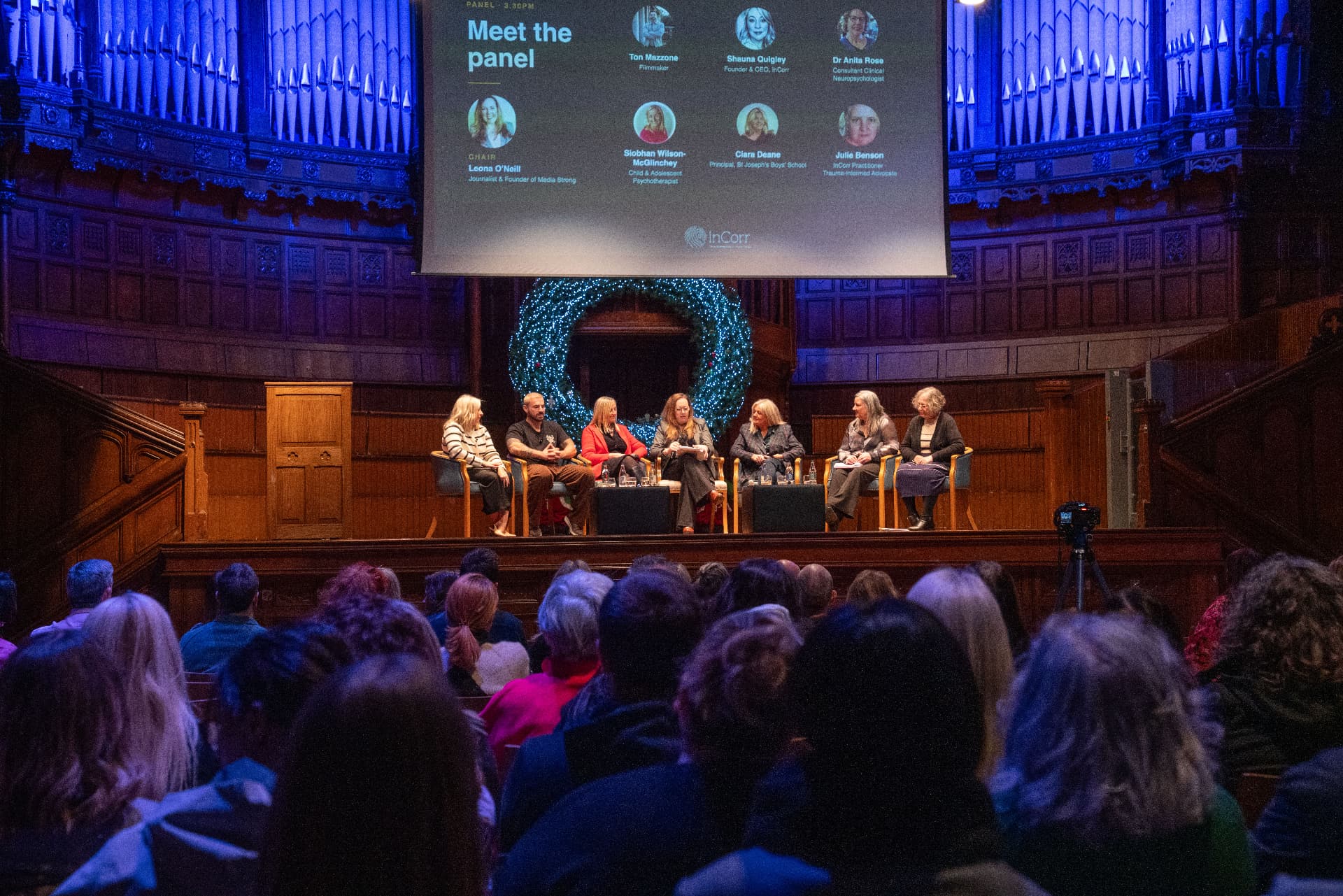
Derry's Guildhall was electric. Welcomed by the Mayor of Derry City and Strabane, Grace Uí Niallais, the TRAUMALITY screening on Sunday 22 November brought practitioners, teachers, students and community members together around a question that reached beyond the film: how could this understanding now become change? A standing ovation for filmmaker Ton Mazzone captured the energy of the afternoon. But the applause was only part of the story. What gave the gathering its significance was the readiness to take the conversation further.
"We know trauma. We know it in our bones," said Shauna Quigley, founder of InCorr, which organised the event. She described a city that had built from the rubble of its experiences and knew how to mobilise and overcome. In that context, the film did not arrive as an introduction to something unfamiliar. It offered a shared language for experiences people recognised, and a starting point for asking what should happen next.
A welcome from the Mayor
The afternoon was opened by the Mayor of Derry City and Strabane, Grace Uí Niallais, who welcomed everyone in Irish and in English. She spoke about how trauma touches individuals, families and communities, often across generations, and why it mattered that the focus of the day was not only on recognising trauma, but on the possibility of healing and transformation.
Councillor Aisling Hutton helped make the gathering possible. When Quigley raised the idea, the response was practical: how could it be supported? The Mayor, the Guildhall and its team came on board. That willingness to help mattered. The afternoon brought civic leadership into the same room as people working with trauma in education, therapeutic practice and community life.
A city ready to mobilise
The event came together in around three and a half weeks, beginning with a conversation in Belfast. Colleges, schools and Derry City FC responded. One lecturer told Quigley she would need a bigger boat: 30 students were coming. The speed of that response gave substance to the energy in the room. This was not simply an audience willing to watch a documentary. People were bringing colleagues, students and their own experience into a conversation they wanted to be part of.
"We are not just a trauma-informed organisation. We are an advocate for trauma transformed." Shauna Quigley, InCorr
Quigley's distinction between trauma-informed and trauma-transformed gave the afternoon its direction. She spoke of clients who wanted more than ways to manage their pain: they wanted to heal. The call for change, she said, was coming from inside the rooms where that work happens. The question was no longer simply whether approaches to trauma should change, but how to mobilise to make that change possible.
From recognition to action
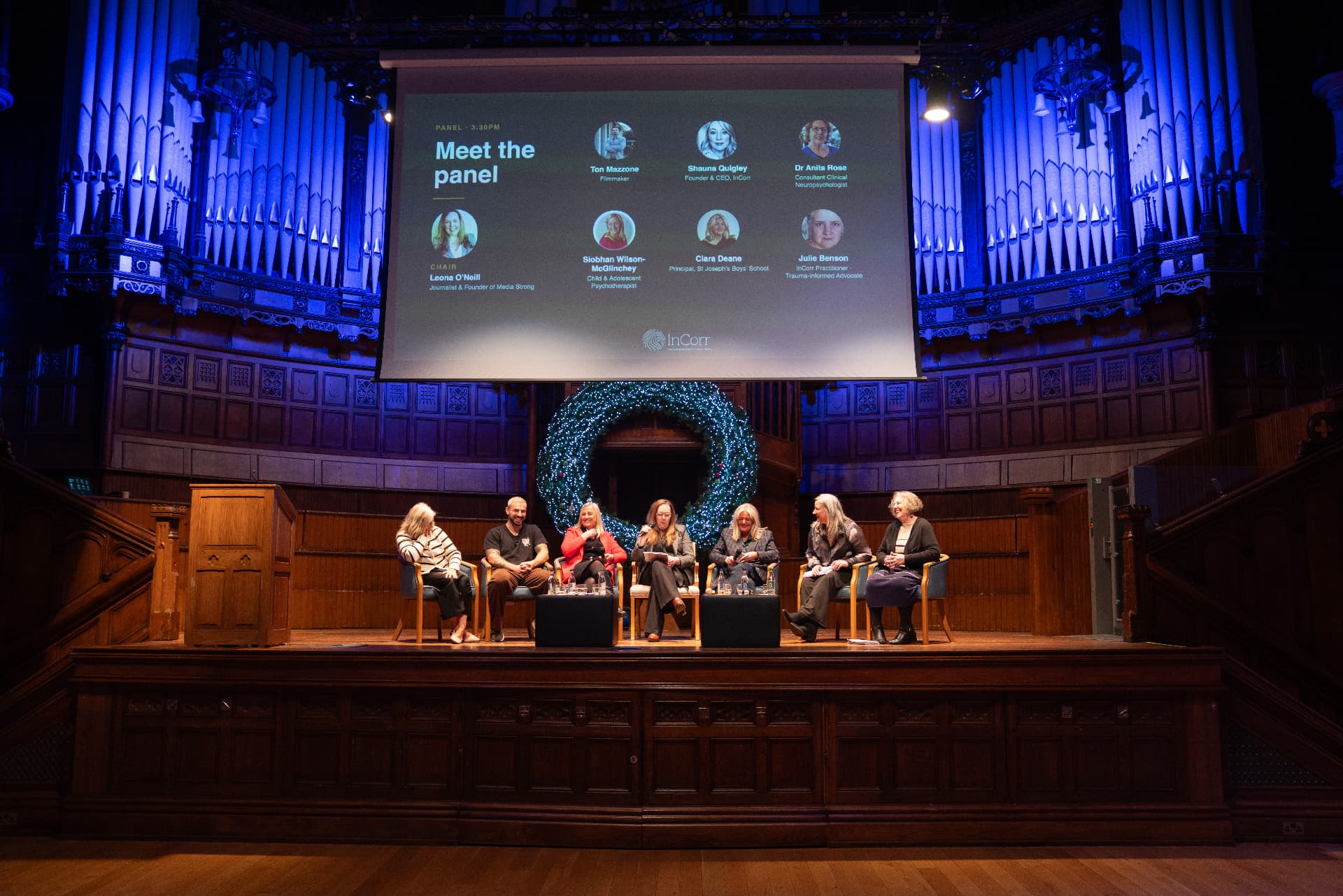
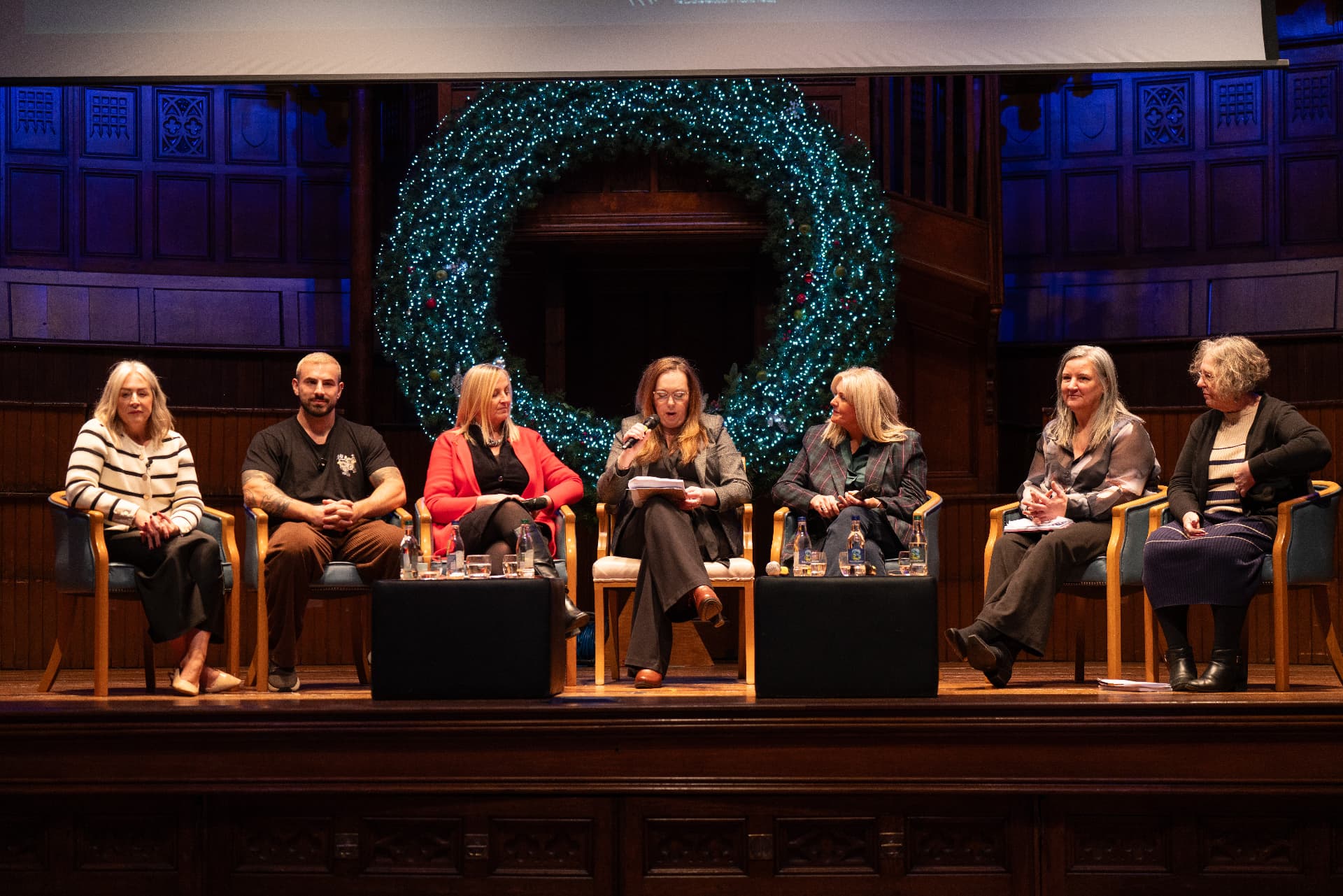
After the film, journalist Leona O'Neill, founder of Media Strong, chaired a panel with filmmaker Ton Mazzone; Shauna Quigley; Dr Anita Rose, consultant clinical neuropsychologist; Siobhan Wilson-McGlinchey, child and adolescent psychotherapist; Ciara Deane, principal of St Joseph's Boys' School; and Julie Benson, InCorr practitioner and trauma-informed advocate. Their different perspectives brought the discussion back to the places where understanding has to make a difference: classrooms, clinics, families and the systems around them.
The discussion explored what it means to look beyond behaviour and symptoms to the person underneath. Curiosity was a recurring theme: not simply asking what is wrong with someone, but considering what might explain their responses. The challenge was to carry that understanding beyond the screening, into the way people are taught, supported and treated. Awareness alone was not the destination. Changes in systems and in people's experience of those systems were the measure that mattered.
"The call for change is coming from inside the rooms." Shauna Quigley, InCorr
A pivotal moment, and a question of what comes next
The standing ovation was a powerful response to Mazzone and the film. The conversation around it gave the afternoon a wider significance. Derry had brought together people with the lived experience, professional knowledge and community connections to ask how that response could become something lasting. The gathering felt pivotal not because change had already been secured, but because the appetite for it was so clear.
From the Belfast conversation that helped set the event in motion to the response at the Guildhall, the screening offered a compelling glimpse of Northern Ireland's readiness to take this work forward. InCorr, the civic welcome and the breadth of the panel made that readiness visible. The question left by the afternoon was not whether trauma deserved attention. It was how to turn the energy in that room into changes people could feel in their lives.
"Let's mobilise and let's overcome how it currently is." Shauna Quigley, InCorr
Watch online
See the film for yourself
Stream TRAUMALITY wherever you are. Your 7 days start when you press play, with subtitles in 23 languages.
Watch the filmHost a screening
Bring it to your community
Anyone can host a screening, in a local cinema, hall, workplace or living room. We provide the licence, the film and a discussion guide.
Host a screening0 comments
Join the conversation
Loading comments…