Tuesday 17 November 2026
Why the Medical Model Fails Trauma: Deb Dana, Robert Whitaker, AD4E and Sophie Olson on Traumality
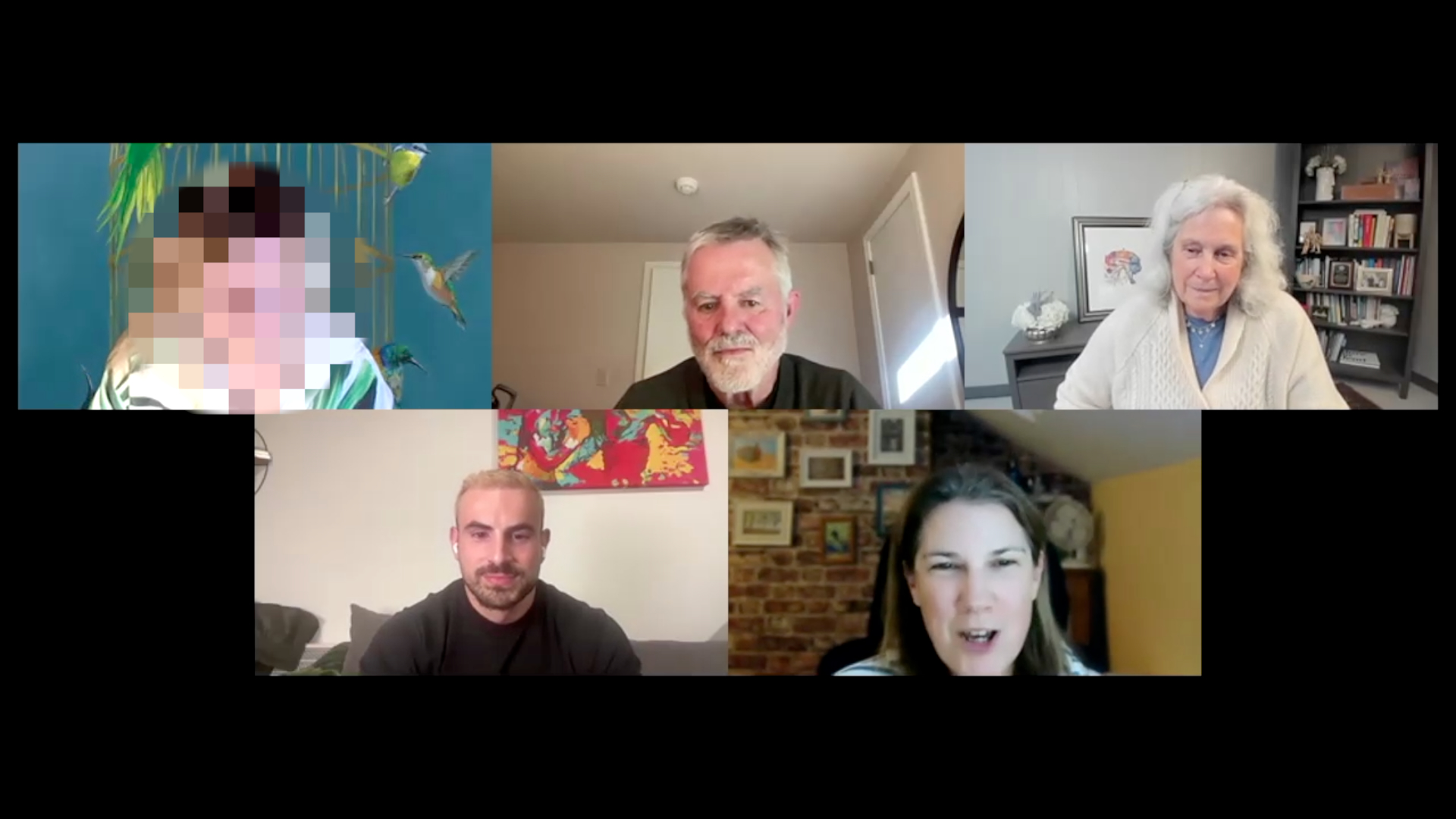
What changes when distress is understood in the context of a person's life, rather than as something wrong with them? At AD4E's online screening of Traumality on Monday 16 November, that question opened into a discussion about relationships, professional responsibility and the gap between calling a service trauma-informed and experiencing it that way.
Over 100 people joined the evening. Amber Canham chaired the conversation with journalist and author Robert Whitaker of Mad in America, clinician and author Deb Dana, Sophie Olson, founder of The Flying Child, and the film's director, Ton Mazzone. Their perspectives brought together reporting on psychiatry, therapeutic practice and lived experience of childhood sexual abuse. The discussion did not settle on a single explanation or a neat set of answers. The panellists questioned one another, and the audience continued the conversation in the chat.
Looking beyond the individual
Whitaker began by reflecting on the film's storytelling, but the question it left him with was a wider one. Trauma is often discussed as something that happens to an individual, followed by difficulties that the individual must learn to manage. He asked what gets missed when the conversation stops there: the conditions children grow up in, the pressures on families and the environments in which distress develops.
Drawing on the personal accounts he has heard and published, he returned to the importance of relationships. Again and again, he said, people described finding a person or a setting where they felt safe and where life began to hold meaning. His challenge was not to dismiss therapy, but to ask whether support also helps people build connections outside the therapeutic relationship, and whether schools and workplaces themselves need to change.
Dana agreed that the individual cannot be separated from those around them. Speaking from her work translating polyvagal theory into practice, she described regulation as relational: another person's steady presence can offer an experience of safety that has been missing. Whitaker's emphasis on environments and Dana's emphasis on the nervous system met at a practical question: what is it like to be with someone who helps you feel safe, rather than someone who is trying to fix you?
Communication before disclosure
For Sophie, who said this was her third viewing of the film, the conversation began with what adults notice, and what they fail to hear. When she disclosed childhood sexual abuse to her family, she was asked why she had not said anything before. Looking back, she described having communicated through her body, her ways of surviving and the way she was living her life, long before she had been able to put the experience into words.
“Just because somebody hasn't told us what has happened to them, it doesn't mean they haven't been communicating it to you in a different way.” Sophie
Her point was about listening, not assuming that any particular behaviour tells us what has happened to a person. Responses to distress can be misunderstood, labelled or treated as problems to remove without enough curiosity about their context. Sophie also cautioned against falling back on the familiar phrase ‘hurt people hurt people’. For survivor parents, she argued, that framing can obscure the consequences of professional inaction and the difficulty of getting support, even after disclosure.
Who decides whether care is trauma-informed?
Canham brought the discussion to a term now used widely across services: trauma-informed. What does it actually look and feel like, she asked, and where are organisations getting it wrong? Mazzone drew a distinction between knowing about trauma and responding differently because of that knowledge. One training session or a designated lead cannot, on its own, change how an organisation manages staff, receives complaints or responds to someone asking for help.
Sophie argued that the judgement belongs to the people experiencing the service, rather than the organisation making the claim. She described compassionate, consistent, non-judgemental practice, and the importance of repairing ruptures when something goes wrong. She also challenged the assumed divide between ‘professionals’ and ‘survivors’. Staff may have their own histories of trauma, and may not feel safe acknowledging them in the systems where they work.
“When someone tells me they're a trauma-informed clinician or trauma-informed agency, my next question is: tell me more, what does that mean?” Deb Dana
Dana's response was to ask for the conversation behind the label. Whitaker added a caution about the marketplace around therapy: terminology can become a way of presenting a service without necessarily demonstrating the understanding or competence behind it. Across the panel, the emphasis remained on what people actually experience, rather than what appears in a policy or on a website.
The people who stay
In her closing reflections, Sophie wanted to recognise the people within services who do look beneath the surface and do not turn away when a conversation becomes difficult. Remembering her time as an inpatient, she named healthcare assistants, nurses, administrative staff, cleaners and the chef among those who had helped her hold on to hope. Their contribution was not confined to a clinical role. It was in how they treated her.
That attention to everyday encounters sat alongside the evening's larger questions about systems and future generations. Sophie wanted children to have opportunities to think critically about the explanations they are given for distress. Whitaker saw trauma-informed care as a step towards broader reform. Dana returned to the capacity to be a safe, welcoming presence for others, even when the scale of change feels overwhelming.
After the screening
The audience's questions were part of that discussion, not simply an addition at the end. Canham noted the continuing activity in the chat, including people asking how they could take the film back to their organisations and use it to open conversations of their own. Dana reflected on the connections being made through watching and talking together. Mazzone thanked AD4E, the panel and everyone who had contributed, returning to the question of how the evening's ideas might enter everyday relationships, communities and work.
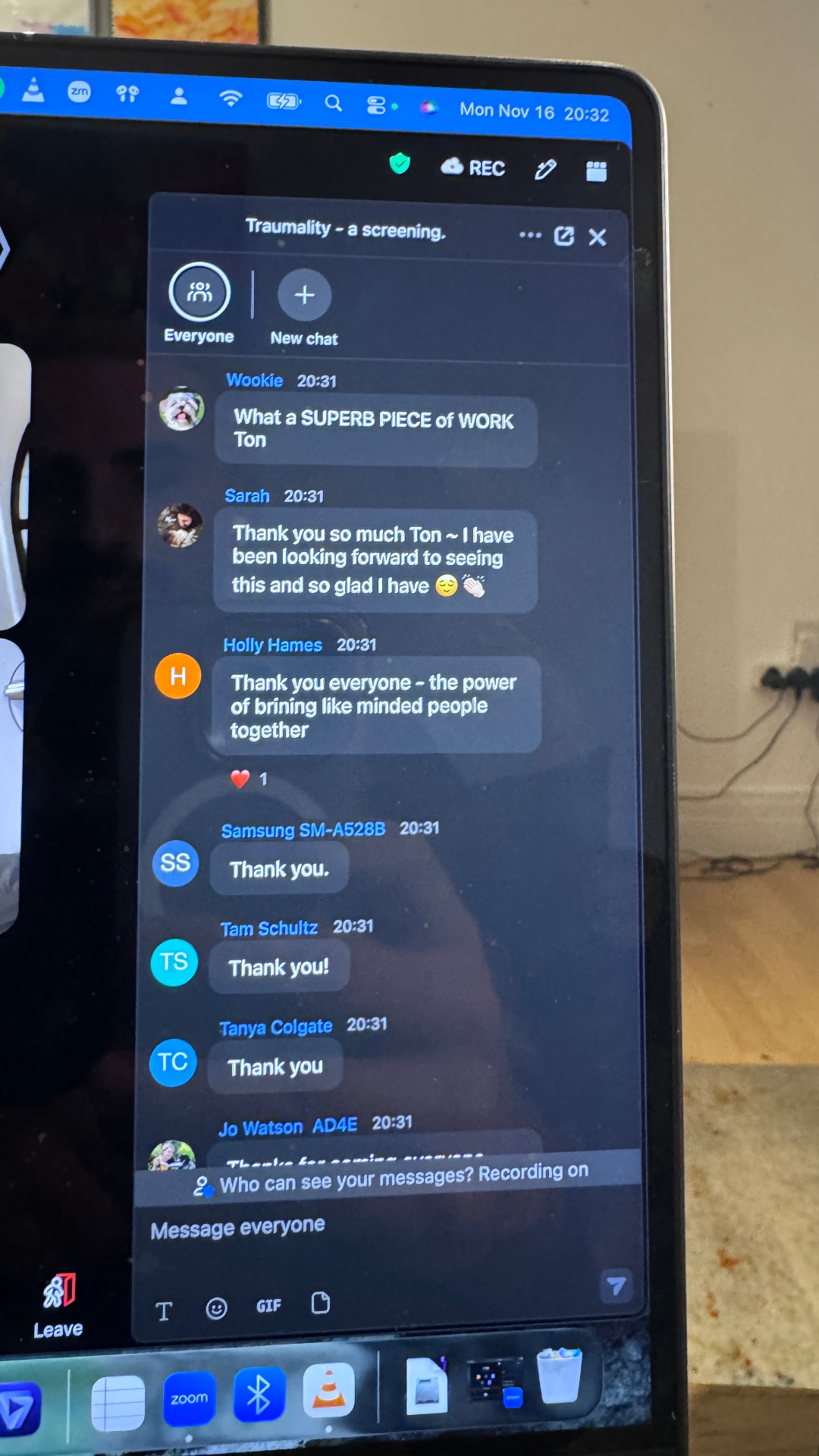
The panel recording is available below. It preserves a conversation in which professional knowledge and lived experience could question each other, without requiring everyone to arrive at the same answer.
“This is the sort of discussion that leaves us with questions, leaves us with some understanding.” Robert Whitaker
Watch online
See the film for yourself
Stream TRAUMALITY wherever you are. Your 7 days start when you press play, with subtitles in 23 languages.
Watch the filmHost a screening
Bring it to your community
Anyone can host a screening, in a local cinema, hall, workplace or living room. We provide the licence, the film and a discussion guide.
Host a screening0 comments
Join the conversation
Loading comments…