Tuesday, 15 September 2026
The one thing I can't seem to quit...
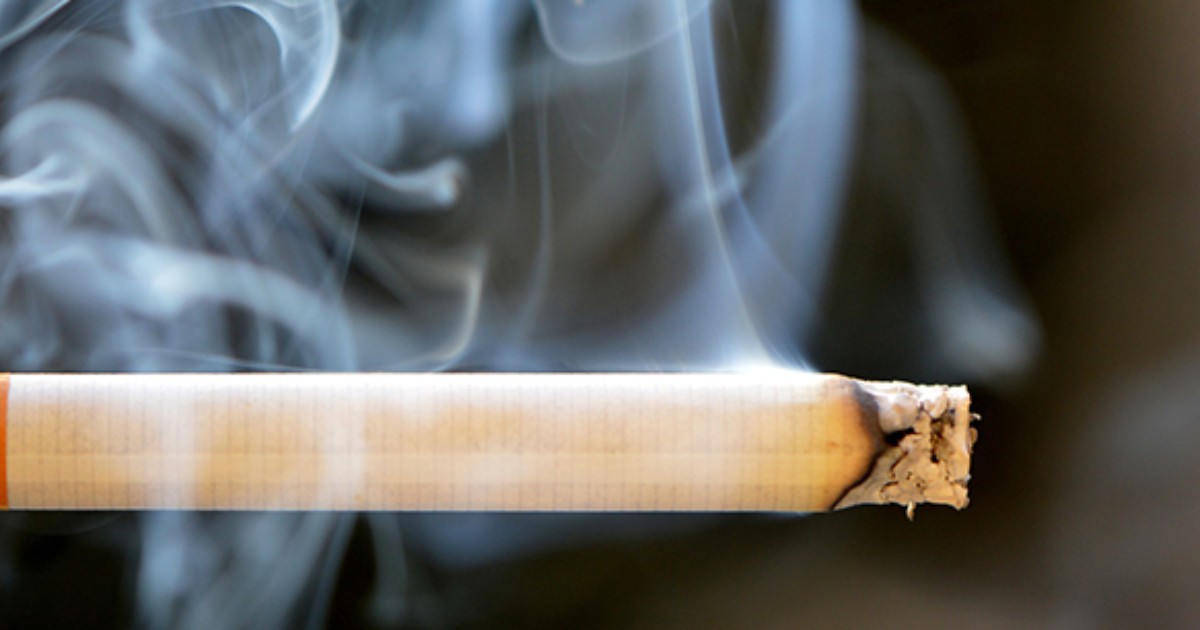
I've given up heroin. I've given up crack cocaine. I've managed to walk away from things that once felt so deeply woven into my life that I couldn't imagine existing without them. And yet… I still smoke.
I smoke despite being on the verge of stage 4 COPD. I smoke with oxygen sats in the 80's. I smoke even though I wake up unable to breathe and with an enormous headache because my body has built up too much carbon dioxide overnight. I wake up, sit for two hours to stabilise my system and feel functional, then I smoke. I am not a stupid woman and, logically speaking, my behaviour is harmful, destructive and causing daily damage. I see that clearly. Yet I have been unable to stop. This is the bit that makes absolutely no sense to me. I know how to quit things. I've done it. I've gone through horrific withdrawals. I've sat with cravings. I've learned to tolerate discomfort. I've rebuilt a life without substances that, at one point, I genuinely believed I couldn't live without.
So why the hell can't I seem to give up cigarettes? It's tempting to reduce it to nicotine addiction. And obviously, nicotine addiction is real. Nicotine changes the brain, withdrawal is mildly unpleasant (As I'm writing that my head is protesting that I've never woken up in the night sweating and shaking for a cigarette though...) and cigarettes are extremely effective at delivering nicotine quickly.
But I think that's only part of my story. Because when you've lived with trauma, substances can become about much more than the substance itself. They can become regulation. Escape. Predictability. A way of changing how my body feels when my body feels unbearable.
And increasingly, research is showing a relationship between trauma and smoking that makes this make a little more sense to me. A 2024 systematic review looking at 267 studies and more than 2.7 million people found that people exposed to trauma or living with PTSD were more likely to smoke, tended to experience greater nicotine dependence and withdrawal, and were less likely to successfully quit. One of the mechanisms researchers repeatedly identified was smoking as a way of regulating negative emotional states associated with trauma.
And that makes me stop and think... Because perhaps the cigarette isn't just a cigarette. Perhaps sometimes it's five minutes of peace. Perhaps it's something to do when my nervous system is screaming. Perhaps it's a socially acceptable reason to leave the room. (At least more socially acceptable than popping out for a crack pipe!) Perhaps it's a ritual that tells my body, 'we're alright, it's okay, we're doing something familiar now.' Perhaps it's a tiny pause between me and whatever I'm feeling. And trauma has done some funny things with my relationship with safety.
When you've spent enough time in survival mode, any relief can become incredibly valuable. Your brain learns very quickly what makes things feel different. Heroin made things different. Crack made things different. But cigarettes do too. They're just considerably more socially acceptable. Nobody looks at you in outrage when you say, 'I'm going outside for a cigarette.'
There is something almost ridiculous about having successfully given up hard drugs and still being defeated by something I can buy in a supermarket. By something I can legally have delivered to my house.
But perhaps it's not actually ridiculous. Perhaps different addictions served different purposes. And perhaps getting rid of the substance isn't always the same thing as getting rid of the need.
I've spent years learning about trauma and the nervous system, and one of the things I'm very aware of is that behaviours that look destructive from the outside can sometimes have a very understandable function from the inside. That doesn't make them healthy. It doesn't mean I should keep smoking. And it definitely doesn't mean cigarettes are harmless. It just means that if I want to understand why I can't quit, 'I'm weak' probably isn't a particularly useful explanation.
Research into adverse childhood experiences has also found a strong relationship between cumulative childhood trauma and tobacco use. A 2023 meta-analysis of 102 studies involving around 900,000 people found that exposure to adverse childhood experiences was associated with significantly increased odds of smoking.
My ACE score is 9. That doesn't mean trauma causes everyone to smoke. People aren't equations. But it does suggest that when we talk about addiction, we need to look at the whole person rather than simply the substance. Because sometimes the thing we're trying to take away is doing a job. And if we don't understand the job, we're left asking someone to cope without the coping mechanism they've been using.
I've done that before. I've taken away the heroin. I've taken away the crack. And eventually I had to learn how to live with everything that was underneath them. Smoking feels strangely different. Maybe because I can function while doing it. Maybe because nobody around me is particularly shocked. Maybe because it doesn't destroy my life in the same spectacular way. Maybe because its legal. Or maybe because some part of me still believes I need it. That I need 'something'.
That's the bit I'm interested in now. Not 'Why can't I just stop?' But: What does smoking still do for me? What happens in my body immediately before I reach for a cigarette? What am I trying to change? What feeling am I trying not to feel? What does that ten-minute cigarette break give me? If I take it away, what am I going to put in its place?
Because recovery isn't always about ripping away the behaviour, sometimes it's about understanding why we needed it in the first place. I don't know whether that will finally be the thing that gets me to quit smoking. I hope it is. Because my lungs would really appreciate it. But I'm beginning to think that I don't need to approach this addiction by asking myself why I'm failing. I've already proved that I can quit.
Maybe this time I need to ask a different question. What am I going to give my nervous system instead?
0 comments
Join the conversation
Loading comments…